Showing posts with label Ray Desmond. Show all posts

Thursday, September 4, 2014

Week Eleven

Daisy and I just wrapped up our last full day of the internship with Kew.  We did the daily 4:00 tool shuffle for the final time.  Then I stayed in the shed a bit later to clean and sharpen my secateurs for the next person.  I would do it tomorrow morning, but I wasn't sure if I'd have time.  However, we did too many interesting things this week to write a pensive, thoughtful, last week post.  I'll save the conclusion of this blog for when I get home to Tennessee.  Let me tell you about our week.

The Salvia Border is divided into two groups --
"old world" ad "new world" sages.  Those closest
in the photo are "new world" selections.
Daisy and I both took Monday off.  I was in Edinburgh until Monday night, and Daisy was preparing for the fall semester of her master's program.  I felt a tinge of regret to miss our last edging day (little did I know...), but it was nice to have a holiday outside of London for a bit.

Stunning Salvia
Tuesday morning, India had a special treat for us.  Daisy and I were going to assist with a Salvia propagation request.  We've done a fair bit of work in the salvia border this summer, and it seems fitting to write a bit more about this beautiful border as this week's topic.

A quick background
The salvia border runs along the western side of a brick wall that borders the order beds and the rock garden areas.  The border is divided in two by a path that connects these two areas.  The section that is closest to the School of Horticulture building contains "old world" salvia species.  These are sages that are native to Europe, Asia, and Africa.  The section nearest to the woodland garden has the "new world" salvia collection.  These are all native to North and South America.

Although the Salvia Border is only
about nine years old, the brick wall
behind it dates back to the 1700's
India tells me that the border was planted sometime around 2005.  Kew's salvia border is quite new when you consider how old the gardens are.  However, the brick wall that runs behind the border is actually very old.  It is the only remaining boundary wall that separated the historic Botanic Garden and Pleasure Grounds areas.  This section of the wall served as one part of the perimeter for the Royal Kitchen Garden.  The other sections of the boundary wall were demolished by then director Sir William Hooker in the 1800's (Desmond, 373).

Like any truly old structure, this wall has has been added to and patched up on occasion.  The attractive window-like design at the top was added in the 1870's.  The largest repair job was done in 1965 after a gale blew down a 60 foot section of it (Desmond, 373).

Maintenance
My regular readers may be familiar with some of the chores we do in the salvia border.  Most of what we've done this summer has been deadheading and watering.  I mentioned a few weeks ago that although many sages are extremely drought tolerant, the specimens at Kew have adapted to London's normally frequent rain showers.  The month long drought this summer stressed out many of the plants in this area.  Daisy and India watered with hoses and watering cans, but sometimes that still wasn't enough.  There were occasions when the drip irrigation had to be left on all day or overnight before the plants would perk up.

Most of the maintenance that I've done in with salvia is deadheading.  For anyone who doesn't know, deadheading is the process where the finished flower heads are cut back to encourage another flush of blooms.  Busy gardeners may just hack "new world" sages back to about a foot after they've finished flowering mid-summer.  The plants will recover in time for another show in the fall.

This summer we had enough staff available to properly deadhead.  About once a week a small group of us would spent some time carefully snipping back to spots on the stem that had new buds emerging.  Although this took a fair bit of time, the "fiddly" work paid off with virtually non-stop flowering.

Propagation
Hobby gardeners and professionals alike relish the opportunity to grow plants from cuttings.  It's intensely rewarding to take a sprig of stem and encourage roots to sprout from the base.  You would think that with the size of Kew, many of the staff would have the chance to propagate plants pretty frequently.  The surprising truth is that Kew is so massive that they have an entire team whose only job is plant propagation.  When an area needs new plant material, they submit a "prop request" to the team and receive the plants when they're ready to go out.

Joanna demonstrates how to collect
Salvia cuttings to propagate
Joanna, a member of this propagation crew, showed Daisy, India and the ropes as she carried out India's prop request for the salvia border.  The first step was to go through some health and safety training for the chemicals and tools that we would be using.  This involved reading some paperwork and signing forms.  After that, we went out to the salvia border.

Joanna provided us with sterile secateurs to use rather than our own.  We also had to re-sterilize the pruners between accessions to prevent spreading disease through the collection.  Many of the salvia were infested with leafhoppers, so we also had to carefully remove any foliage that had leafhopper damage.  "We don't know where they've laid their eggs," Joanna told us, "But we know they were on the damaged foliage."  Leafhoppers can be extremely difficult to control once they become established in the propagation house, so Joanna and her crew do as much as they can to prevent them from getting in.

We transported the stem sections from the salvia border to the propagation area in moist plastic bags.  We added a bit of water to the bags, then shook them to spread the droplets around, then emptied what remained so there would be no standing water to soak the plants at the bottom of the bag.  We placed two labels, complete with scientific name and accession numbers, in each bag at the time of collection.  This helped to keep us from mixing up the specimens.  When we arrived to the propagation house, Joanna placed our collections in a refrigerator.  This prevented the plants from drying out while we were working.

This Salvia is just about
the right size for rooting
Joanna and I pushed a clean table out of the propagation house to a flat area nearby.  We worked outside of the propagation house to help keep any leafhoppers still on our material from escaping into the greenhouse.  We were given sterile knives and cutting boards and went to work.  We prepared a second moist bag and placed one of the labels in each bag.

First we cut the stems into sections that had four nodes.  The bottom-most node was cut flat, and the leaves and buds were carefully removed from the bottom two buds.  Joanna explained that roots were more likely to spring from the meristematic tissue present at the nodes.

Next we removed excess foliage.  If you remember from your science classes in school, leaves photosynthesize, and water is required for photosynthesis.  Water is absorbed from the roots, but cuttings don't have any roots.  Removing some foliage or cutting large leaves in half reduces the amount of water needed by the stem, which improves the chances of developing roots successfully.

When we had prepared enough cuttings, we soaked them for a short period in a diluted ammonia mixture. This would suffocate any remaining pests and sterilize the plant material.  Then we gently stuck each stem cutting along the rim of a pot.  They were 5 inch pots that had a nice perlite / coir mixture that would hold water and air.  We added the date to the labels, and a label was placed in each pot.  We also marked the number of cuttings we stuck and the date on a form.

Next, we brought the cuttings to the propagation house.  The prop house used to have a misting bench, but new health and safety regulations mandated that it be dismantled.  Now they use a plastic covered bench in the greenhouse.  Plants are kept under a second layer of plastic on the bench.  At least once a day one of the propagation team mists the plants manually with a spray bottle.  This can get quite hot during the summer, and sometimes they need to relocate to a shadier spot.

We sterilized our knives between accessions.  Each of us propagated three accessions before returning to work in the order beds.

Joanna demonstrates how to sterilize,
then stick the cuttings
An intern's perspective on Kew's propagation
Kew's propagation procedure is way more intensive than what I've done in the past with the University of Tennessee Gardens, UT's Department of Plant Sciences, and "Every Child Outdoors".  But that's because Kew is massive, and the propagation team has to process a huge amount of material throughout the year.

Sterilization is of utmost importance to prevent infestations, and their procedures are perfectly reasonable for good integrated pest management practices in an operation of their magnitude.  I was most surprised to learn that, in addition to good cultural practices, they rely heavily on biological controls to keep pests in check.  Buckwheat grows outside beneath the ventilation windows of the propagation house to attract beneficial insects that will eat pests, like aphids and whiteflies.

Although I agree that the propagation team is essential to streamline horticulture operations through the gardens, I have to admit that it's a little sad that the other horticulturalists don't usually get the opportunity to grow their own plants.  This means adds another layer of bureaucracy to garden operations, in that teams have to submit propagation requests, wait until the prop team gets to their order (which is usually within a reasonable amount of time), then wait until the plants are grown the Kew's specifications before planting out.  However, I think this can be convenient, it definitely frees horticulturalists up for other important tasks, and its necessary for a garden Kew's size.

The rest of the week...
Wednesday morning we dug some Heuchera 'Chocolate Ruffles' from the long border and transplanted into the peony border.  We used the Heuchera to fill the gaps around the Hemerocallis that we had dug last week.  The rest of the day was spent weeding in the Lamiaceae (mint) beds.

Kew's makeshift humidity chamber
for rooting cuttings
Thursday was spent preparing the landscape for the horticulture student graduation on Friday.  We did get some edging in after all, since the graduation photos would be taken in the aquatic and grass gardens, and the edges there had gotten a bit scruffy.  After that Daisy and I tied in roses on the pergola.  The last full day was actually quite a bit like our first day at Kew, with some differences.  We were more confident with pruning and tying the roses, and definitely faster and more effective with the edging shears.  What a difference eleven weeks can make!

I'll be working with the crew tomorrow morning, then I'll join Kew's School Visits Programme to shadow some classes on the journey through the gardens.  It should be exciting, but I regret not having that last bit with my team.  That afternoon I plan to have one last wander through the garden and enjoy the privileges of having my intern pass one last time.

Thanks for reading, and check back to read the dramatic conclusion of NEW at Kew.

If you have any questions, comments or suggestions, please feel welcome to leave a comment or send me an email.

To see more photos from this week, be sure to check out the album "Week Eleven" on the Plante on Plants Facebook page.  "Likes", shares and comments are appreciated. 

This week's British treat was two whole slices of a traditional parkin cake.  Really dense, flavorful, and filling -- perfect for morning tea!  Thanks Martin and Charlotte!  It was fantastic!


All photos were taken by Amanda Plante at the Royal Botanic Gardens, Kew unless otherwise stated in the caption.

Sources:
  • Desmond, Ray.  (2007).  The History of the Royal Botanic Gardens Kew (2nd Edition).  London: Kew Publishing, Royal Botanic Gardens, Kew. 
  • The Plant List website
  • The Royal Botanic Gardens, Kew website and staff

Tuesday, August 26, 2014

Week Nine

I was fortunate enough to spend last weekend touring some fantastic gardens in Cornwall and Paris.  I had a really super time, and I'm really looking forward to when I get a spare minute to fill you in on my Garden Guide blog.  Unfortunately, I'm sad to say that I've been having some awful problems with technology that continue to impede my ability to update my blogs.  I thought it would be best to go ahead and share everything from this week, then go back later on next week and give you the scoop on what happened last week.  Sorry for the inconvenience.

Really basic labels in the "Every Child Outdoors"
berry patch at the Knoxville Botanical Gardens
Instead of starting right back to work on Monday, I used some of my free days to spend Monday and Tuesday visiting more gardens.  When I got back to work on Wednesday morning, Kate, Shelley and I were able to make some last minute arrangements for me to visit Wakehurst Place.  I hopped on the mail truck that runs between Kew and Wakehurst and spent the rest of the day in Sussex.  I will write all about that visit in my Garden Guide blog as an appendix to this week's post.

Thursday I was finally back to work.  While Shelley and Beth mowed in the grass garden, the rest of the crew did a "weed sweep" of the order beds.  Crissy and I started on one end of a row, India and Daisy started on the other end, we met in the middle, and then moved onto another row.  The order beds actually cover quite a large area, so this is actually no small chore.  We all worked on this until afternoon tea.  After that, I had the opportunity to help Crissy place some new plant labels.  Although we only did this for a brief time, I found the activity really interesting.  More information about the process is given below.

How Kew does labels

A brief history
Kew has been labeling their collections since as early as 1773.  Someone connected to Kew at the time wrote that, "It is said that orders have been given to the Head gardener at Kew that instead of placing numbers upon the different plants and flowers in the Garden, they shall be inscribed with their names at full length."  Before then, each plant had a number that corresponded to an entry in a printed plant catalog (Desmond, 340).

Standard plant labels in use at the
University of Tennessee gardens include the
genus, specific epithet, and common name
In the early 1800s, Kew suffered some decades of neglect.  However, it was during this time in the 1820s that the curator, John Smith, began the massive undertaking of relabeling all the plants in the gardens to include their specific names.  Before then, the plant labels only included the genus and catalog numbers, and some of these contained confusing inaccuracies (Desmond, 127-128).

As I've written before, the grass collection was the real apple of Smith's eye, and it seems to have received most of his attention in the great relabeling.  In the 1840s only the grass garden was fully and appropriately labelled (Desmond, 148).  It would be another 14 years before the tree and shrub collections received metal hanging name tags (Desmond, 346).

Finding creative ways to use plant labels to track collections and display information continues to be a consideration for Kew today.  According to the most recent edition of Ray Desmond's History of the Royal Botanic Gardens, Kew, the gardens contain "the world's largest documented botanical collection consisting of about 30,000 plant taxa" (Desmond, 333). 

The way that plants are labelled is something that varies across different botanic gardens.  Some that are more concerned with culinary or medicinal properties of plants may include facts about use on the label.  Other institutions that are geared toward educating people on plants that may work for their home landscape will include the common name and symbols that correspond to the growing requirements.  Kew's primary responsibilities are scientific research and conservation, which influences the format of their plant labels.

What does it all mean?
First and foremost, each of these plantings must be labelled with the genus, specific epithet, and family so that horticulturalists, researchers, and visitors know what they are.  Not many of Kew's labels include the common name, but some do.  The label may also include the variety, cultivar, or hybrid name.

We'll use Eucalyptus dalrympleana as an example
of Kew's modern plant labeling system
The top right corner of each label includes the plant's accession number.  The first four digits correspond to the year they were brought to Kew.  Since Kew has only been tracking plant accessions since 1969, the accession numbers of many specimens that are quite old will begin with 1969.  If there was a record of exactly what year an older plant was brought to Kew, it may be reflected in the accession number.

The numerals that follow the hyphen identify when the plant was accessioned in a year.  We'll use one of Kew's Eucalyptus dalrympleana as an example.  The accession number is 1972-6025.  That means this plant was the 6025th plant that was brought to Kew in the year of 1972.

In addition to knowing exactly when a plant was introduced, Kew tracks who collected each plant.  That doesn't mean they track who was the first to collect the species as a whole (although I'd imagine that quite a few of Kew's specimens have that distinction).  Rather, they log who collected the specific plant that is now in the collection.  The initials of the donor are located just below the accession number on the label.  Going back to the Eucalyptus from our example, the donor initials are FRIC.  This stands for the Forest Research Institute of Canberra.

Many, but not all, of the labels will also include where the plant is native to.This information will be located in the bottom right hand corner.  This may be incredibly specific or quite general.  This depends on the native range of the plant.

The herb labels at the ECO Gardens
include the Latin name, common name,
and symbols for the garden uses
Living collections database
Any of the information on the label can be used be used by Kew staff to look up more information about the plant in Kew's living collections database.  The best way to find information about the specific plant is to search using the plant's accession number, although it is possible to look up information using the scientific name, donor initials, or physical location.

The database entry will include more details about how the plant has been managed ("curation"), exactly where it was collected, notes for cultivation, taxonomic notes, and possibly information of scientific interest such as the anatomy, physiology, or ploidy level.  Staff are able to update a database entry so that it reflects the most current information for each plant.  When a plant dies its status is changed from "live specimens" to "dead specimens", but all the information remains on the database.

Adding new labels
Earlier this summer, Crissy submitted a list of all the new plants that had been added to the order beds and the long border.  She received new labels in the section's office mail this week.  She pulled labels for a selection of plants, the we fitted each label with a stand.

Daisy and I had spent a rainy Friday morning the week before pulling these stands out of the cereal beds in the grass garden, removing their labels, and brushing the soil from the stands.  It was nice to see them put to use!

When we finished putting together the labels and stands, Crissy and I placed them out in the gardens.  Some plantings had a temporary label from before they were accessioned.  The genus and species was printed on black paper and taped to a blank plastic label.  Other plantings had white plastic nursery labels that were partially buried under the mulch.

An intern's perspective
Kew has a really broad mission.  Historically, their emphasis has been on the scientific side of horticulture, from collection to economic botany.  Until relatively recently, Kew did not see any need to provide more information to the public.  Sure, visitors were allowed in the garden, but they were rewarded with the experience of being able to see the displays, landscape, conservatories, and specimens rather than with information.

The Eden Project tended to use multiple signs -
including individual plant labels - to communicate
loads of information to visitors
Over the last few decades, Kew's mission has evolved to include public education.  Perhaps it's time for the labeling system to take this into account.  In the future, it would be worthwhile to include at least a common name.  Longwood and Missouri Botanic both do.  But why just play catch-up with other botanic gardens?  Kew is famous for blazing new frontiers.  Perhaps Kew could have a focus group with visitors to ask what further information they'd like to see on the labels in order to better meet their needs.

Don't get me wrong.  I don't think Kew should remove the accession numbers, donor initials, or any of the information that's currently on the labels.  I just think it would be a good idea to add a bit of information that is educates the visitors, since they don't have access to the living collections database.  But that's just my opinion.

Thanks for reading, and check back to read what happens next week in my internship with Kew.

If you have any questions, comments or suggestions, please feel welcome to leave a comment or send me an email.

To see more photos from this week, be sure to check out the album "Week Nine" on the Plante on Plants Facebook page.  "Likes", shares and comments are appreciated. 

This week's British treat was a bona fide Cornish scone from the Eden Project Core cafe.  The scone was bigger than a man's fist and it had fresh, local sticky clotted cream and jam that had whole chunks of strawberry.  This was the mother of all scones!


The Eden Project even uses heiroglyphics for their visitors who may not be English savvy
All photos were taken by Amanda Plante at the Royal Botanic Gardens, Kew unless otherwise stated in the caption.

Sources:
  • Desmond, Ray.  (2007).  The History of the Royal Botanic Gardens Kew (2nd Edition).  London: Kew Publishing, Royal Botanic Gardens, Kew. 
  • The Plant List website
  • The Royal Botanic Gardens, Kew website and staff

Saturday, July 19, 2014

Week Four

Kew displays plants taxonomically
by family in the order beds
There's been some interest from readers over the past few weeks in learning more about the weekly edging we do in our area of Kew's hardy display section.  Although I did give a very brief explanation in the first week's post, this week I'm going to give more detail about where we're edging, how this task is done, and my thoughts on this type of work.

This is a great week to write about edging, because we really did quite a lot of it.  Nearly all day Monday was spent edging the order beds and around the water garden, and I know that Simon, an apprentice, went on the edge the secluded garden, grass garden, and around the peony beds.  It's a good thing Simon really enjoys edging!

All about edging in my section

A quick history of the order beds
Kew's order beds (or "plant family" beds) were established under William Hooker's directorship.  Before that time, the space was one of the gardens used to grow produce for the Royal Family.  However, in 1846 a new kitchen garden was planted at Frogmore, and the Royal Family agreed to allow Hooker to use the space for other pursuits.

Lamiaceae, or the mint family, takes up
multiple plots of Kew's order beds
Like many other areas at Kew, the order beds were laid out taxonomically by family.  Originally they were organized by Jussieu's natural classification system (Desmond, 152).  In 1869, the collections were reorganized by the Genera plantarum which was created by, then director, Joseph Hooker and his colleague George Bentham (Desmond, 226, 348). 

Today, the order beds may be in for another reorganization.  Kew's Jodrell laboratory and other prominent botanical and horticultural institutions have been unlocking the secrets of plant's DNA.  Their discoveries have called into question current plant classification systems (Desmond, 318-319).  It looks like genetic fingerprinting will lead the way to new a method of taxonomic organization. 

Although the order beds are a riot of color in the summer, the display is more for education than aesthetics.  Visitors can walk through the garden and compare the similarities and differences between plants within the same family.  For instance, although "Love-in-a-Mist" or Nigella damascena and Anenome both look very different in flower and foliage, they're both in the buttercup family, Ranunculaceae.

Google satellite image of Kew's order
beds.  I figure that we edge
around 6 miles every week!
The order beds are arranged in 104 plots.  Although from within the garden they seem like normal, rectangular plots, they're actually parallelograms that are laid out at a slight angle.  Visitors may be able to note this unique arrangement by standing at one end of the garden and looking down the grass main pathway.  May I suggest a view from the gardener statute looking toward the Jodrell lab?  The mound of the Temple of Aeolus gives another nice view, but it would be best in the winter when the trees between the temple and the order beds are dormant. 

One feature of the order beds that visitors may appreciate but not necessarily notice are the crisp, clean borders between the beds and the grass paths.  This distinction is achieved by edging.

What is edging anyway?
Edging is the process where grass or some other plant is cut at the edge of a garden bed border or path.  There are two motivations for frequent edging.  First of all, it keeps grass from growing into garden beds and onto pathways.  For gardeners in the southeast U.S. who are constantly battling to keep their bermuda (Cynodon dactylon) or Zoysia lawns out of their gardens, you know that once one sprig of grass crosses the border the whole bed is compromised.  Second, crisp, clean edges really do look nice.

Cool tools
Kew's hardy display section generally uses two tools for edging -- edging shears and half-moon edgers.  However, a spade can be a good substitute for a half-moon depending on the type of job.  Edging shears are best for edging along a straight line with an uneven drop.  For instance, we use edging shears to cut along the borders of garden beds and where metal edging meets concrete paths.  Half-moon edgers are used to cut borders that are nearly even, such as along an inlaid brick pathway.

We use edging shears for most
of the edging in the order beds
Before coming to Kew, I was only familiar with the sort of edging we do in Knoxville.  We usually give our borders a fresh edge with a power edger once or twice a year (depending), put down a good layer of mulch, and weed out encroaching grass as necessary. 

Edging the order beds
Every Monday, the whole crew and two volunteers edge all of the order beds and around the rose pergola.  We don't edge around the beds in the northeast quadrant of this area, because they are currently being used as a vegetable garden for a chef's television program.

By my very rough approximations, I figure that every week we edge somewhere in the neighborhood of 10,200 feet.  That's nearly 2 miles!  About 8,700 feet are around the order beds (when you subtract the vegetable quadrant), and the remaining 1,500 feet are the beds around the rose pillars.  Every two or three weeks the crew also edges along the paths within the order beds, which are an additional 1,250 feet.  I didn't calculate the other areas we edge (like the border around the, the peony beds, grass garden, water garden, or secluded garden), but they do take a fair bit of time as well.

India demonstrates how we edge
the order beds every week
The normal Monday routine usually takes seven staff members and two volunteers about three hours to complete.  That's taking into account the fact that the volunteers start a bit later and finish a bit later.  So that's 21 man hours.  Phew!

Visitor reactions
Although I've only been at Kew for a short while, I have noticed some visitor's funny reactions to edging.  The most prominent memory would have to be from a school tour two weeks ago.  A large class of middle-school age students were walking through the order beds when I heard a shrill squeal behind me.  One girl was very distressed by what I was doing to the grass.  She called out to her teacher, "Look at what she's doing!  She's killing that plant!"  It's actually more like giving it a haircut.

One of the other members of our crew noticed that visitors from southeast Asia are especially intrigued by this chore.  I have to say that these visitors do stop and photograph us edging more frequently than those from anywhere else.  Another staff member recalled a time when a visitor from the U.S. stopped her and said, "Now, I know that there is a power tool that does the same thing."

An intern's perspective 
I must admit, there are times (usually right before morning tea on Monday) that I wonder why we do this chore.  I mean, the grass just grows back again, and in seven days it looks like we hadn't even done anything.  But all I need to do is look up from my shears and back to where we've already worked, and I can't help but feel some pride and accomplishment.

The gardens really do look much better afterwards, and as one of the finest botanic gardens in the world, Kew does need to look smart.  I've also got to say that spending some time edging saves lots of time with weeding.  We don't edge regularly in Knoxville, and I know what a pain it is wrestling bermuda grass out of a garden bed.

Aside from edging...

In addition to a whole lot of edging, we also worked in the secluded garden.  The whole crew and a group of four volunteers spent Tuesday weeding, deadheading, watering, edging, and generally doing a thorough job of tidying up.  Chrissy, India, Daisy and I went back to this area on Wednesday, where the team I was in scooped loads of duckweed (Lemna) out of the stream and Daisy's team worked on tidying up the bamboo garden.  We also weeded, watered, and deadheaded the birch border that is next to the grass garden and tidied up roses on the pergola.

Thursday and Friday afternoons we had a special treat.  The artists for Kew the Music did sound checks the last hour or so of work, so I got to hear Elvis Costello warm up with some nice songs and Bjorn Again cover sections of ABBA's "SOS" and "Mamma Mia".  

Thanks for reading, and check back to hear about my second month as an intern at Kew.  Four weeks down, seven weeks to go!

If you have any questions, comments or suggestions, please feel welcome to leave a comment or send me an email.

To see more photos from this week, be sure to check out the album "Week Four" on the Plante on Plants Facebook page.  "Likes", shares and comments are appreciated. 

This week's British treat of the week is treacle tart. Mmm mmm!

 
View of the order beds from the Temple of Aeolus

View of the order beds and the Temple of Aeolus from the School of Horticulture building

All photos were taken by Amanda Plante at the Royal Botanic Gardens, Kew unless otherwise stated in the caption.

Sources:
  • Desmond, Ray.  (2007).  The History of the Royal Botanic Gardens Kew (2nd Edition).  London: Kew Publishing, Royal Botanic Gardens, Kew.  177-179, 345-346.
  • The Plant List website
  • The Royal Botanic Gardens, Kew website and staff


Saturday, July 12, 2014

Week Three

Much of this post will be about Kew's grass garden,
since that is where we spent most of our
time this week.  Photo by Daisy.
You know the routine
 
Although there were a few interesting diversions this week (more on that later), I think Daisy and I have started to settle into our section's normal routine.  Monday was spent edging and weeding the order beds, Tuesday and Wednesday were spent weeding the grass garden, and Thursday was spent deadheading and training at the rose pergola.

Getting to know the grass garden

We did spend two full days and part of one morning working in the grass garden this week, so I figure it's appropriate to go into a bit more depth on that subject. I'll provide a very brief history of the grass garden at Kew, share this week's experience with grass verification, write a bit about the main weed problems, and conclude with what it feels like to weed one of these areas.

A quick history
Ornamental grasses have been cultivated at Kew nearly since its foundation.  The botanic gardens were founded in 1759, and the earliest accounts for a grass garden on the site were in the 1760's (Desmond, 39).  The circular grass beds were not included on a 1763 map of the gardens (Desmond, 56 - 57), so they must have been established later in that decade.

John Smith, Kew's first curator (served 1841 to 1864), seemed to have a special interest in the grass collection.  In 1828, on his own initiative, Smith reorganized and verified the species within the grass garden (Desmond, 127 and 343).  Smith must have researched the history of the garden before this great undertaking, since Ray Desmond cites Smith's 1880 Records of the Royal Botanic Gardens, Kew when pinpointing the date the grass garden was established (Desmond, 39 and 142).

Many visitors still miss the grass garden during
their visits.  In 2006, Kew added a path from the
Princess of Wales Conservatory (structure to the right)
and Cambridge Cottage (not photographed)
to increase traffic through the grass garden.
Smith either installed or updated the beds with the old circular design in mind.  He arranged the grasses in a large bed with four concentric circles and placed the tallest grasses in the center of the beds to create an eye catching display (Desmond, 129 and 148).  The grass garden was located relatively close (slightly northeast) to its present location (Desmond, 150-151, 173 and 336).  Considering the Kew is over 300 acres in size and many of the collections, such as the arboretum, have moved considerable distances over the site during the past 250 years, the movement of the grass collection from the 1820's to today is really not that far.

The grass collection was first moved in 1963, and again in 1982 to the space where it presently resides (Desmond, 354 - 355).  In the 1990's, Kew remodeled and revitalized several garden areas, including the grass the grass garden.  In 1997 circular beds were added, and in 1999 a lawn wheel of British native grasses was installed (Desmond, 310 and 358).  Despite all of the work done in this garden, it was still overlooked by visitors.  That is why in 2006, Kew added a path through the grass garden that would connect the Princess of Wales Conservatory and Cambridge Cottage.  The hope was that this would increase traffic in this area.

Historically, grasses at Kew have been organized in
concentric circles.  In the late 20th century, grasses
were organized in thin, rectangular beds. Between
2007 and 2011, Shelley Cleave's team expanded the
beds to add depth and dimension, as seen above.
According to Shelley Cleave, Kew's main curator of the current grass garden, the new grass collection had been laid out systematically in relatively thin strips, somewhat similar to the order beds.  Although this type of design makes a handy reference garden for botanists and horticulture students, it isn't that aesthetically pleasing for the public. Under Shelley's direction, the beds were expanded in size to add some depth and layers.  Like Smith, Shelley planted larger specimens in the center of the beds and the smallest grasses toward the edges.  This expansion happened between 2007 and 2011. 

Today the grass gardens are a riot of movement, sound, texture and color. The landscape is pleasing, educational, compelling for visitors, and botanists and horticulture students are still able to use this area as a reference garden.

Botanizing
After a certain period of time, Kew's
hort team in the grass garden sends
samples to be verified by the herbarium
Although Friday morning was damp and dreary, we were in for a real treat.  Because many of the specimens in the grass garden had been installed twenty or more years ago, they needed to be verified with Kew's herbarium. Essentially that means that a botanist needs to look at these plants to verify that they are the same as the label and living collection database reflects.  There are far too many plants in the grass garden to verify all at once, so Shelley and the herbarium have been going through the collection alphabetically, a handful of plants at a time.

Friday morning, Shelley showed us the steps on the horticulture side of verifying some grasses.  First, she went on Kew's live collection database and printed off the information for the four plants to be verified.

A wing of Kew's herbarium
Next we went outside to collect materials from each specimen.  If the botanists in the herbarium aren't provided with enough information, they can only partially verify a plant.  That is why Shelley collected the roots, stem, and inflorescence of each species.  If possible, she would include newly opening and fully open flowers and seed heads.

Then, the plant material and an information sheet for each plant was placed in a sealed plastic bag.  Martin, a horticulture student in the group, was charged with delivering the samples to the herbarium.  Really interesting!

Wicked weeds
Weeding the grass garden was much more intensive than it had been the week before.  Last week we were mostly focused on improving curb appeal by removing weeds that were visible to visitors.  This week, Shelley gave Daisy, Simon and me small sections within different beds to weed intensively.  Shelley encouraged us to be very thorough when weeding each section, and I did my best to remove as much of each weed as possible.

View within the grass garden prior to weeding
The two main problems -- couch grass (Elymus repens) and wild garlic (Allium ursinum) -- need to be completely and carefully removed.  If even the smallest stolon, rhizome or bulblet remain in the soil, then the weed problem will persist.  If these weeds are pulled normally without consideration for the pieces that are left behind, then there may be a dozen or so that sprout from what that one weed left in the soil.

The grass garden is pretty large, and the mulch isn't as thick as it is in the order beds, which makes it more difficult to completely remove entire weeds.  Add into the mix the fact that we're supposed to make every effort to preserve that thin layer of mulch without exposing any soil, and you can see why this took all day Tuesday and Wednesday to do.

An intern's perspective from within
View within the grass garden after weeding
Weeding the grass garden is a lot like swimming in a deep pool.  You can't just walk in -- you have to dive in with your arms out in front to protect your face from grasping, razor sharp foliage.  You can't wade through the sections of the bed.  Rather, you must stroke ahead to make way and kick legs to prevent trampling or tripping.

Weeding on your hands and knees is like swimming under waves of Miscanthus.  You pray the wind doesn't rise lest you become tossed under the whipping fronds.  On the freshly weeded, brown, soft mulch floor, the temptation to lay down gets stronger as the work drags on.  Thankfully, Simon throws a life saver ("Tea time!") long before there is any danger of drowning in the grassy sea.

Staff Picnic

Tuesday afternoon was a real treat -- Kew had a staff cookout!  Although I hadn't really met anyone (besides interns) in the horticulture department outside my section, I was able to get an idea of how many horticulturalists there are at Kew in last week's meeting.  The barbeque on Tuesday was even more boggling because it included all the people who make the gardens run -- not just horticulture staff.  It's really amazing just how many people actually work at Kew.

There wasn't as much mingling between departments as one might expect, but there was a little.  The hort people tended to stick together, the Joddrell folks were in another group, etc.  One employee in the foundation did something really brilliant to get the horticulture people talking and comfortable -- she asked a plant question.  Simple, but effective.

She described a plant she had noticed ("It's like a stick with a hard raspberry on it").  There was silence at first, then one person asked for more information. ("It didn't have any leaves or flowers at the time").  A low murmuring started, and then the questions started flowing ("There was no label."  "It was near the Director's garden." "I saw it last week.").  Other horticulturalists who work in the area were tracked down.  Apparently one person walked back there to try to find exactly what she was talking about.  The next morning at work before the Hardy Display section meeting, everyone was all atwitter.  One person had even dreamed about the plant, and woke up in the middle of the night knowing exactly what it was.

Genius.  I need to keep that in my pocket as an ice breaker at the next horticulture conference I attend.

The British treat of the week is scone with clotted cream and jam (or jam and clotted cream).  Sooo decadent. 


The procedure for applying spreads to the scone differ depending on where you are in the United Kingdom.  In some regions, the jam must be spread before the cream, whereas others are vice-versa.  I tried both, and they're both really rich and delicious.  Here's my two cents.  If you want your scone to absorb some flavor from the jam, apply the jam before the clotted cream.  If you don't want a soggy scone, then apply the clotted cream before the jam.  However you choose to prepare this tasty treat, plan on taking a nice, leisurely stroll afterwards to ease your guilt after having such a heavy dessert.

Enjoying a decadent scone with clotted cream and jam at Kew's cafe by the Victoria Gate

As promised, here are a couple photos of Kew's water boxes and my section's tool shed.  More photos can be viewed in the "Week Three" photo album on my facebook page.

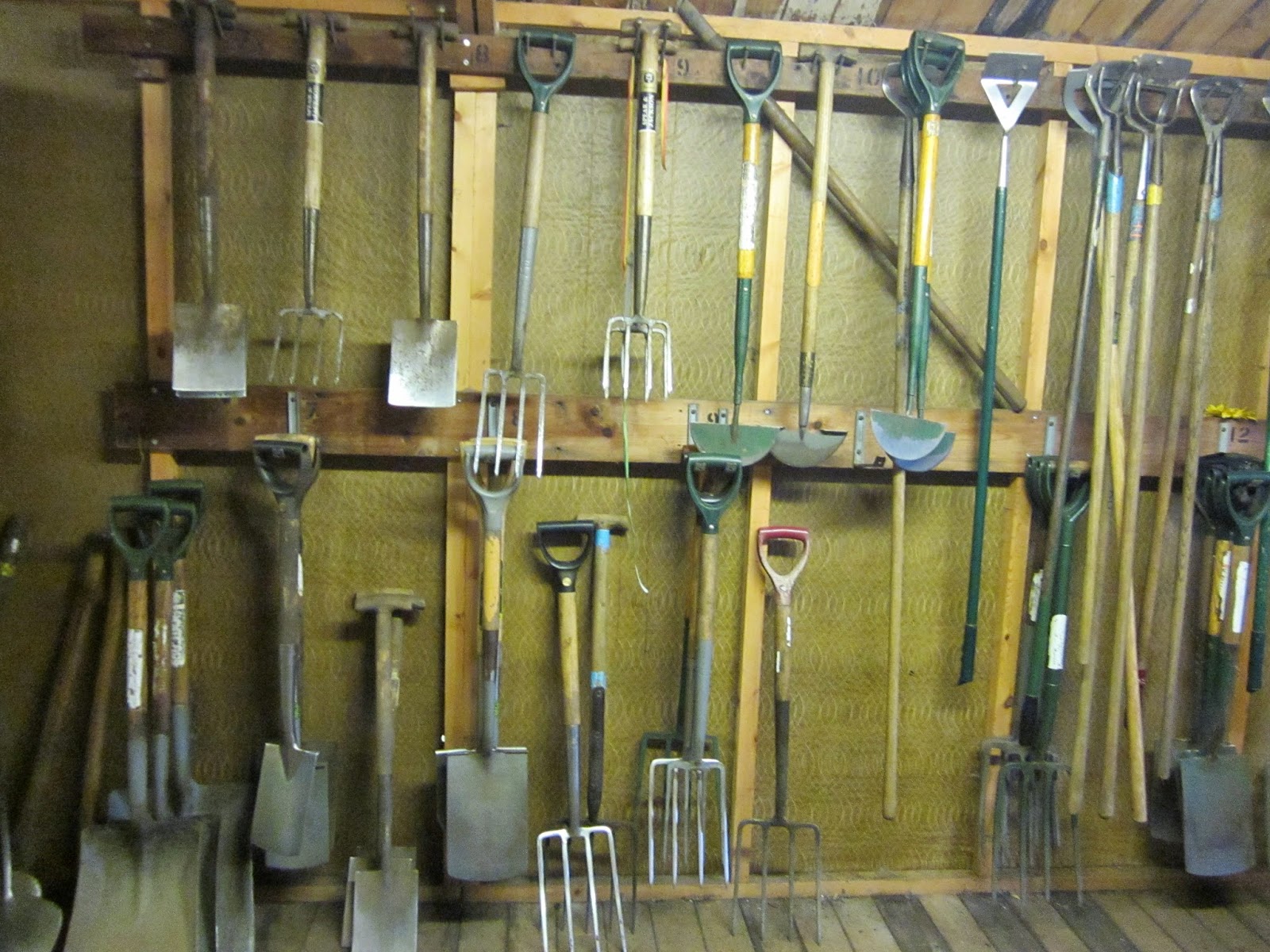
As per one reader's request, here are some photos of our section's tool shed.  Every tool is clean and in its place.  The floors are also clean.  Absolutely the tidiest tool shed I've ever set foot in.  And it is ALWAYS this clean.
As per one reader's request, here are some photos of Kew's irrigation system.  The system is very old, and it can be difficult to replace broken parts.  Water box in the Queen's Garden.  This is absolutely not the state that most boxes are in. I just couldn't get the water boxes in the order beds open for a photo.

If you have any questions, comments or suggestions, please feel welcome to leave a comment or send me an email.

To see more photos from this week, be sure to check out the album "Week Three" on the Plante on Plants Facebook page.  "Likes", shares and comments are appreciated.

All photos were taken by Amanda Plante at the Royal Botanic Gardens, Kew unless otherwise stated in the caption.


Sources: